Artificial intelligence is influencing how businesses operate, make decisions and plan for growth. Its impact is now extending into the workplace, where companies are looking beyond traditional desks and cabins to create offices that are flexible, efficient and better aligned with how employees actually work.
Modern office planning involves several considerations, including team size, collaboration, privacy, technology, employee experience and future expansion. AI can support businesses by helping them understand these requirements and make more informed decisions about their workplace.
For companies looking for a managed office space in Hyderabad, these developments are particularly relevant as workplace expectations continue to evolve.
How Is AI Changing the Way Businesses Approach Office Planning?
Office planning has traditionally been based on factors such as employee headcount, available floor area and the number of workstations required. However, today’s teams may work through a combination of office-based, hybrid and collaborative arrangements.
AI can help businesses analyse different workplace requirements and identify patterns in how spaces are used. Instead of designing an office around assumptions, companies can use data to understand which areas require more attention and which facilities may be underutilised.
This approach can make workplace planning more adaptable and responsive to business needs.
How Can AI Help Businesses Decide How Much Office Space They Need?
Determining the right amount of office space is one of the most important decisions for a growing company.
A business may have 100 employees, but that does not necessarily mean all 100 people need dedicated desks at the same time. Some employees may work remotely, attend meetings or spend their working hours collaborating with different teams.
AI-supported workplace analysis can help businesses examine these patterns and consider an appropriate combination of workstations, private cabins, meeting rooms, collaboration areas and breakout spaces.
This can help organisations make better use of their available floor area while planning for future requirements.
How Can AI Support Flexible Workplace Design for Growing Businesses?
Business requirements can change quickly. A startup can expand its workforce within months, while an established organisation may create a new department or establish a regional team.
Instead of designing an office around one fixed headcount, businesses can consider flexible layouts that can be adjusted as their requirements change.
AI can support this process by helping organisations evaluate different workplace scenarios. Businesses can consider how their office might function with a larger team, additional meeting requirements or changing work patterns.
This makes flexibility an important consideration when planning a modern office.
How Can Smart Technology Improve the Everyday Workplace Experience?
AI and connected workplace technology can also influence how employees interact with their office.
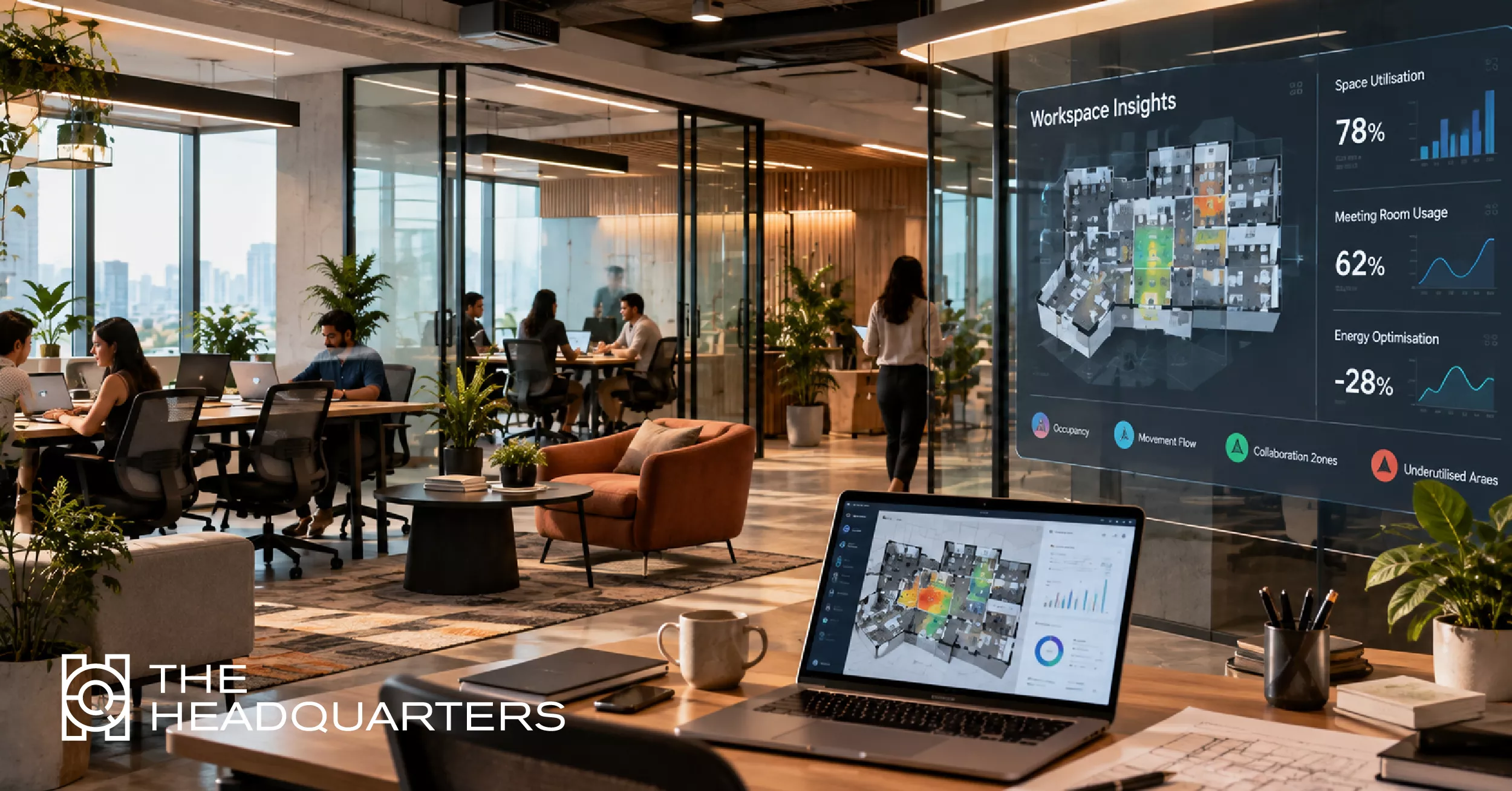
Technology can support practical activities such as finding available meeting rooms, booking workstations, monitoring occupancy and accessing workplace facilities. Businesses can also analyse usage patterns to understand which areas employees prefer and where improvements may be required.
For example, if collaboration areas are consistently busy while certain conventional workspaces remain unused, businesses may consider redesigning part of the office around actual employee behaviour.
The objective is not to replace human decision-making but to provide better information for workplace improvements.
How Can AI Help Businesses Manage Office Facilities More Efficiently?
Office management includes several operational requirements, from lighting and cooling to meeting rooms, security and facility maintenance.
Smart systems can use occupancy and usage information to help businesses understand when particular areas are being used and where resources may need to be adjusted.
This can provide facility teams with greater visibility into everyday workplace activity and support more responsive office management.
For larger organisations and GCCs, where workplace operations can involve multiple teams and large employee populations, such insights can become particularly useful.
Why Are Flexible Workspaces Becoming More Relevant in an AI-Driven Workplace?
The future workplace is unlikely to remain completely fixed. Businesses need environments that can adapt as their teams, working styles and operational requirements change.
Flexible workspaces can provide businesses with ready-to-use infrastructure while reducing the need to independently manage every part of office setup.
A managed workspace can offer furnished workstations, meeting facilities, technology infrastructure, professional common areas and operational support. This allows businesses to focus on their core activities while maintaining the flexibility to adjust their workplace requirements.
What Should Businesses Consider When Planning a Future-Ready Office?
AI is only one part of modern workplace planning. Businesses should also consider the fundamentals that make an office functional and comfortable.
Important factors include:
- Reliable high-speed internet
- Flexible workspace configurations
- Meeting and collaboration areas
- Private workspaces
- Power backup
- Security and access control
- Employee amenities
- Professional facility management
- Convenient business location
- Scope for future expansion
For companies operating in Hyderabad, established business corridors such as HITEC City, Madhapur, Gachibowli and Financial District offer access to commercial infrastructure and business ecosystems.
How Is AI Likely to Influence the Future of Workplace Design?
AI can make workplace planning more data-driven, but successful office design will continue to depend on people.
Employee preferences, business culture, collaboration requirements and the nature of work remain essential considerations. AI can help identify patterns and provide insights, while business leaders and workplace teams decide how those insights should be applied.
For The Headquarters, the future of workspace is about combining technology, flexibility and professional infrastructure to support businesses as they grow.
With managed offices and flexible workspace solutions across key Hyderabad locations, The Headquarters provides businesses with workplace options that can be aligned with their team size, location and operational requirements.
As businesses continue to adopt new technologies, the office itself will also evolve. The most useful workplaces will not simply be technology-enabled—they will be designed to adapt to the people and businesses using them.