Global Capability Centres (GCCs) have moved far beyond their traditional role as back-office support units. Today, they are becoming strategic hubs for technology, finance, analytics, artificial intelligence, research and development, product engineering, and digital transformation.
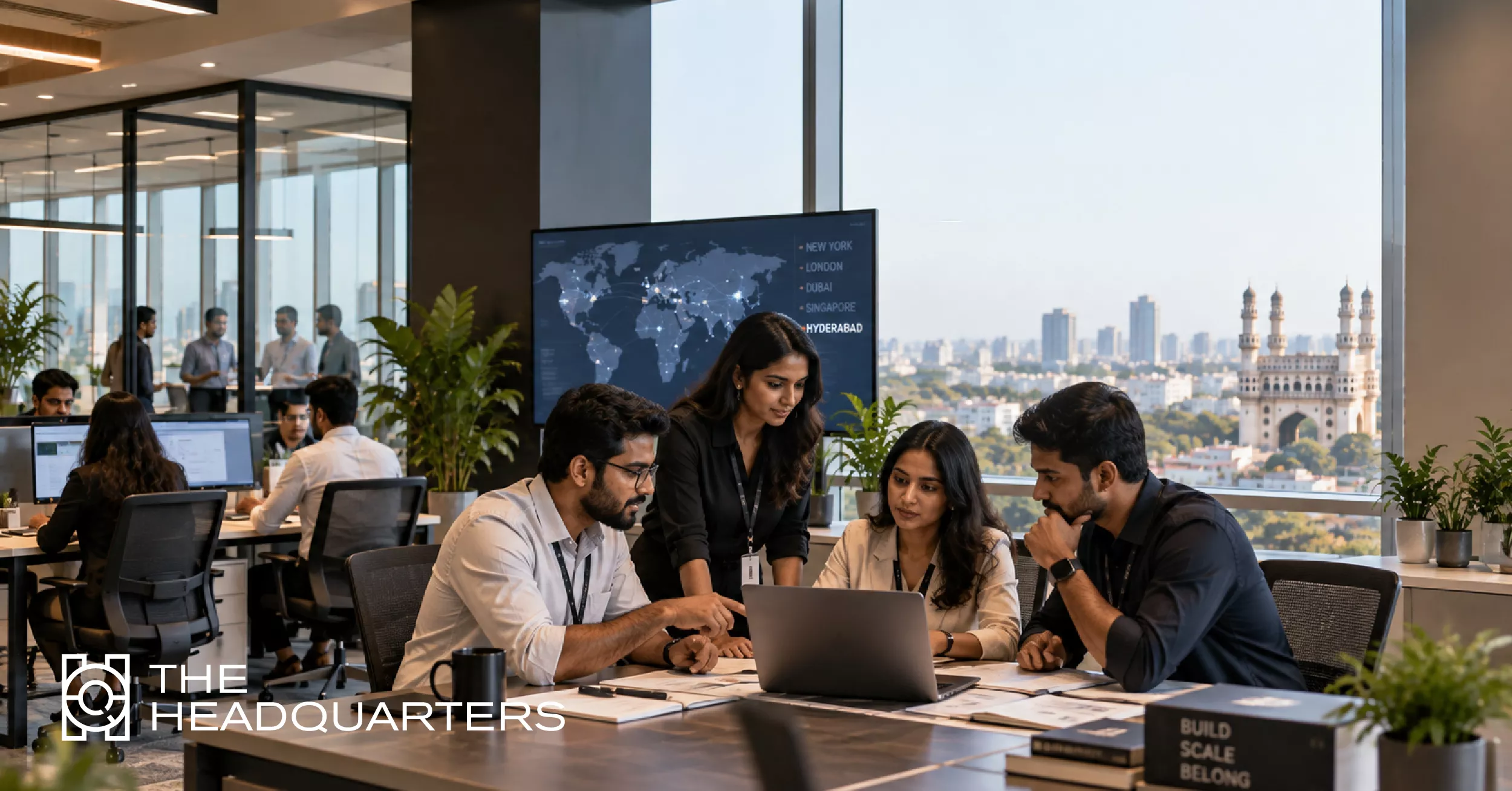
For companies planning their India expansion, Hyderabad is emerging as one of the most important destinations for setting up a Global Capability Centre. The city combines a strong technology ecosystem, skilled talent pool, established commercial infrastructure, and workspace solutions in Hyderabad that can support businesses at different stages of growth.
Recent industry data reflects this momentum. Colliers reported in 2026 that Bengaluru and Hyderabad together accounted for more than 60% of GCC space demand in India, while GCCs have increasingly moved towards higher-value functions such as AI, engineering, analytics and R&D.
What Is a Global Capability Centre?
A Global Capability Centre is a dedicated unit established by a multinational or global company to manage specialised business functions from another location.
Unlike traditional outsourcing models, GCCs are typically owned and operated by the parent organisation. They may support functions such as:
- Information technology and software development
- Finance and accounting
- Human resources
- Data analytics and artificial intelligence
- Cybersecurity and cloud technology
- Research and development
- Product engineering
- Customer and business operations
The role of GCCs has evolved significantly. Instead of simply reducing operational costs, companies now use these centres to access specialised talent, accelerate innovation, develop products and support global business strategies.
Why Is Hyderabad Becoming a GCC Hub?
Hyderabad has developed into a strong destination for global companies looking to establish or expand their capability centres.
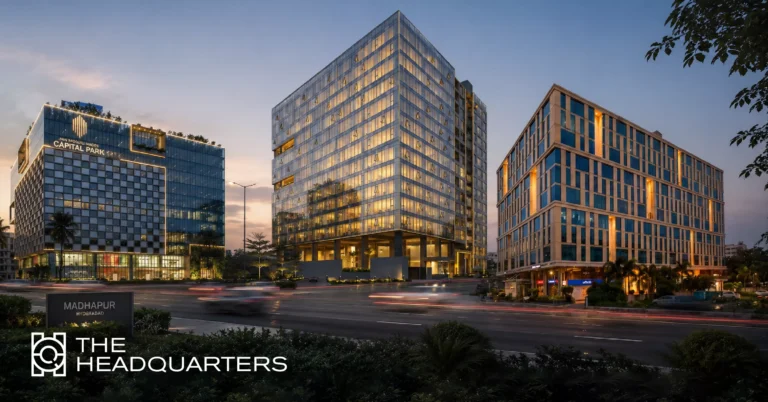
The city’s western business corridor, particularly areas such as HITEC City, Madhapur, Raidurg, Gachibowli and the Financial District, has become a major concentration of technology companies, multinational organisations and Grade A commercial developments.
Hyderabad’s office market is also seeing strong demand from global occupiers. Cushman & Wakefield reported that the city recorded 3.15 million sq. ft. of gross leasing volume in Q1 2026, with GCCs accounting for 26% of total gross leasing volume.
This combination of talent, infrastructure and commercial availability makes Hyderabad an attractive choice for companies building long-term India operations.
GCCs Are Moving Towards High-Value Functions
One of the biggest changes in the GCC landscape is the shift from support services to strategic functions.
Modern GCC teams may work on AI applications, cloud platforms, cybersecurity, product development, financial technology, engineering and advanced analytics. This means companies need access to specialised professionals rather than simply a large workforce.
Hyderabad’s established technology and life sciences ecosystem provides a strong foundation for these requirements.
The evolution is already visible in the market. Colliers expects GCC demand to expand beyond technology, with sectors such as BFSI and engineering gaining significant traction.
Choosing the Right Office for a GCC
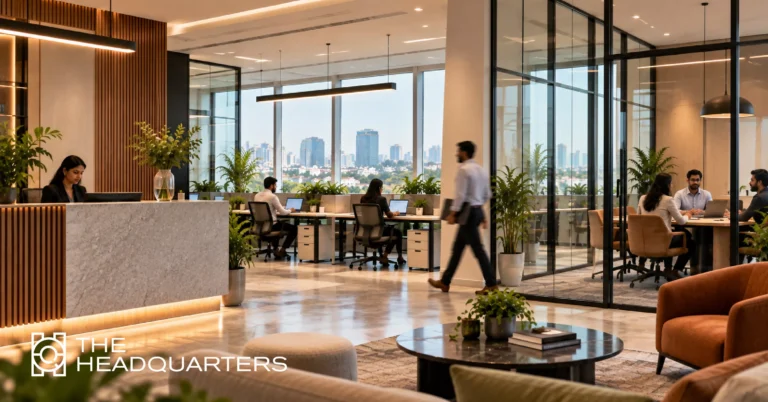
The workplace is an important part of establishing a successful GCC. Companies need more than desks and meeting rooms. They need an environment that supports collaboration, technology, employee experience, security and future expansion.
For a new GCC, a managed office space in Hyderabad can provide an alternative to building an office entirely from scratch.
A managed workspace can offer ready infrastructure, professionally designed interiors, meeting spaces, internet connectivity, facility management and other workplace services. This allows companies to establish an operational presence faster while keeping the workplace adaptable.
For companies entering Hyderabad for the first time, flexible workspace can also provide an opportunity to understand the local market before committing to a larger long-term office footprint.
Why Location Matters for GCCs
For a GCC, location can influence hiring, employee commute, client accessibility and long-term expansion.
Business districts such as HITEC City, Madhapur, Knowledge City, Raidurg and the Financial District offer proximity to major corporate clusters and supporting infrastructure.
For example, office space in HITEC City can provide access to Hyderabad’s established technology ecosystem, while locations around Knowledge City and the Financial District offer connectivity to other major corporate and commercial developments.
The right location should ultimately be selected based on workforce availability, connectivity, business requirements, expansion plans and workplace strategy.
The Future of GCCs in Hyderabad
The GCC model is likely to become increasingly important as global companies look for locations that can provide specialised talent and support innovation.
Hyderabad’s growing GCC ecosystem is already attracting businesses across technology, BFSI, healthcare, engineering and other sectors. JLL’s August 2026 announcement of a 120,000 sq. ft. GCC in Hyderabad also highlighted the city’s continued growth as a major GCC destination.
For companies planning their next capability centre, the question is no longer simply where to reduce operating costs. It is where they can build a strong, scalable and future-ready team.
With the right location and workplace strategy, Hyderabad can provide the infrastructure and ecosystem needed to support that journey.